Confidential

Investor Presentation

Restricted to authorized accredited investors. Please enter the access passcode provided to you to continue.

RavenRock
or Space · next slide
Investor Presentation
Investing in post-revenue startups too slow for venture capital and too small for private equity.
CONFIDENTIAL. For Accredited U.S.-based Investors only. This is not an offer to sell or a solicitation to purchase an interest in any investment vehicle. Past performance is not indicative of future results. Full disclosures available on request.
Spring 2026
RavenRock VC Management, LLC.
56 Broad Street, Ste. 92289
Boston, MA 02109
The Opportunity

Between 2020 and 2022, venture capital deployed more money than any period in history. The power law guarantees most of it will never come back. But the companies are not dead. They are stuck.

Thousands of venture-backed software companies have $2–5M ARR, proven products, and millions in sunk R&D, yet simply cannot raise their next round. They grow too slowly for venture capital and remain too small for private equity.

$100B+
Venture capital frozen in zombie-status startups as of mid-2024
3,000–6,000
Companies globally in the $2–5M ARR range, 18+ months since last round
58%
Year-over-year rise in startup shutdowns, a 2024 record
1,000+
U.S. software companies matching our buy box today

This is not cyclical. It is a feature, not a bug. The power law that makes venture capital work also guarantees that most companies in any given vintage will not be fund-returners. The stranded cohort is what happens when venture capital works exactly as designed.

So long as the asset class operates on power-law assumptions, RavenRock has a structural, self-replenishing pipeline. We compound in either environment.

Deal Flow Universe

Three tiers, from the frozen capital pool to the U.S. companies that match our buy box today. We source from inside.

TAM SAM SOM $100B+ stranded venture capital (2020 to 2022 vintages alone)1 3,000 to 6,000 companies globally in $2 to $5M ARR range, 18+ months since last round2 1,000+ U.S. software companies matching our buy box today

1Carta, Q1 2024 startup shutdown data.   2Data-Driven Investor, "Hold-Forever Investors Quietly Rescuing Zombie Startups from Oblivion" (2025), citing mid-2024 estimates.

Sourcing

Our primary deal flow comes from VCs and fund GPs who route their portfolio companies to us. We are the call they make for their "problem children." Companies too small for follow-on capital, too operational to bridge, too stranded to sell.

The relationship is reciprocal. Existing investors get a path off a position they were going to write down. We get proprietary access to a pipeline no other firm sees.

Sourcing is structural, not transactional. The next vintage's stranded inventory is already being routed to us.

The Funding Gap

Adjacent players exist, including secondary funds, micro-PE acquirers like Constellation Software and SaaS Group, and hold-forever investors. But they typically require outright acquisition of already-profitable assets. No established firm has built a repeatable, branded playbook around structured bridge capital at this stage. The market is fragmented, opportunistic, and relationship dependent. RavenRock is building the category.

That is where RavenRock operates, and how we access deals: directly through GPs of 2017–2020 vintage funds now in harvest mode, looking for any path to recover value from positions they have already written down.

The white space between VC and PE
Venture Capital RavenRock Private Equity
TargetPre-revenue$2–5M ARR, proven PMF$50M+ EBITDA
Risk profileHigh, binaryModerate, asset-backedLow, stable cash flow
Return driverMarkup to next roundRestructuring to profitLeverage and operations
Time to return7–10 years2–4 years3–5 years
CompetitionIntenseNear zeroModerate
What We Do

RavenRock deploys structured bridge capital into stranded post-revenue startups. Burn and headcount cuts are substantially complete by Month 3. The company is cash-flow positive by Month 9, with durability confirmed before the ownership ratchet converts at Month 12.

We invest via convertible note, not buyout. If the restructuring succeeds, we own meaningful equity at a fair valuation. If targets are missed, we own the company at a fraction of replacement cost. Either outcome generates value.

StructureCheck SizeTarget ReturnHold Period
Fund I direct$500K–$1.5M2–6x2–4 years
The Structured Bridge
BridgeRatchetRestructureOutcome
$500K–$1.5M convertible note provides runway to execute Board control at Month 6 if off-track. Majority ownership at Month 12 if profitability targets missed. By Month 3: burn and headcount cuts substantially complete. By Month 9: cash-flow positive. Targets hit: equity at fair value. Targets missed: majority control.

Profitability is defined as positive cash flow sustained through a full renewal cycle combined with net revenue retention above target, not a single month of positive P&L.

This structure aligns every party. The founder gets the only available path forward. Existing VCs get a free option on upside: new money in, board seat off their hands. If the restructuring succeeds, their equity is worth something. If it fails, they were writing it down anyway.

Investment Criteria

We ignore 99% of startups. The companies that fit our buy box share six characteristics.

01

$2–5M ARR

High enough to matter, small enough to be ignored by Tier 1 VCs and PE.

02

75%+ Gross Margin

Pure software. No services revenue dragging the model.

03

Under 6 Months Runway

Lead investors have declined to bridge. We are the only capital available.

04

Proven PMF

A mature product with measurable retention. No moonshot R&D required.

05

Impaired Cap Table

Overpriced last round, stacked preferences, investor fatigue.

06

Cooperative Founder

Exhausted but willing to accept restructuring for a real path forward.

How We Underwrite

We do not value companies on growth trajectory or on liquidation recovery. We value them on the spread between bridge size and replacement cost. The discount to replacement is the real margin of safety.

ComponentDescription
Replacement Cost (floor)What it would cost to rebuild the company from zero. Engineering, customer acquisition, infrastructure, compliance, and contracts. For a typical $4M ARR target, $25M to $40M.
Restructured Profit (ceiling)Post-restructure ARR multiplied by a profit-quality multiple of 2 to 4x. Anchors the hit-case conversion cap.
Bridge (entry basis)$500K to $1.5M. Our actual capital at risk.
Discount to Replacement95%+. The margin of safety on every deal.

The two conversion caps are functions of this framework, not negotiated numbers. The hit-case cap approximates restructured ARR times a conservative profit multiple. The miss-case cap approximates the cost to complete the restructuring as a controlled asset. Both outcomes are underwritten to a cost basis well below replacement value.

The Math

Bridge (capital at risk)
$750K
Convertible note into a 3 to 4M ARR target, restructured to 2.8M ARR.
Discount to replacement
97.5%
$750K bridge against ~$30M replacement cost (2.5% of rebuild).
Hit-case conversion cap
$5.6M
2.8M restructured ARR x 2x profit multiple.
Miss-case conversion cap
$1.5M
Cost to complete the restructuring as a controlled asset.
RavenRock Protocol

We do not cut until we know what we are cutting. A two-week diagnostic precedes every reduction.

PhaseActions and Targets
Pre-Phase: Diagnostic Two-week diagnostic. Engineering audit, customer dependency mapping, vendor triage. Nothing is cut until this is complete.
Phase 1: Stabilize Precision reduction to engineering core plus two. Fractional CFO, legal, and HR deployed from Operating Network. AI tooling activated across engineering team. Target: 70% burn reduction by Day 90.
Phase 2: Restructure Shared RevOps engaged. Pricing audit and renewal repricing. Customer segmentation. Product roadmap reduced to retention requirements only. Target: cash-flow positive by Day 270.
Phase 3: Confirm Full renewal cycle sustained. NRR above threshold. Conversion cap set by outcomes. Target: performing or controlled asset by Day 365, underwritten below replacement cost.

The same Operating Network resources are deployed across every portfolio company. Fractional CFOs, shared RevOps, and turnaround engineering leads are repeated capabilities, not bespoke hires.

Illustrative Deal

Illustrative, based on the profile of companies in our target market.

B2B workflow tool. $4M ARR, 78% gross margin, 35 employees, burning $400K per month. Raised Series A at a $32M valuation 18 months ago. Lead investor will not bridge. Founder has six weeks of runway. RavenRock invests $750K via convertible note, underwriting to a 30% ARR decline during restructuring (post-restructure ARR of $2.8M).

Before RavenRockAfter Restructuring
$4M ARR$2.8M ARR
$400K/month burnCash-flow positive
35 employees10 employees
6 weeks runwaySelf-funded
Targets hitTargets missed
Conversion cap$4M$1.5M
RavenRock ownership~19%51%
Exit (multiple × $2.8M ARR)5x = $14M1.5x = $4.2M
RavenRock stake~$2.7M~$2.1M
Return on $750K~3.5x~2.9x

Different multiples by design. Hit case is profit-quality SaaS valued at 5x ARR, miss case is a controlled distressed asset at 1.5x ARR. The 30% ARR underwrite is already conservative, so further decline still leaves cost basis well below replacement value. Strong returns when the restructuring works. Capital protection with a decent floor when it does not.

Our Discount Rate

When an LP asks for our discount rate, the honest answer is: it is high. We underwrite each deal to a 30% to 40% target IRR. The bridge size and conversion caps are set so the cost basis already clears that hurdle on entry.

The required return is high because RavenRock is the only institutional capital willing to enter a stranded company at the bottom of its cycle. We take the risk that no one else will take. The cost basis is built to be paid for it.

Why the rate is high

Last money in.

No follow-on round will mark us up. There is no future financing event to underwrite to. The return must come from operations, not from the next markup.

Operating intervention required.

We do not write checks and wait. The Protocol is a hands-on program with measurable milestones at Day 90, Day 270, and Day 365. We do the work, not just price the risk.

Distressed, illiquid, concentrated.

Two to four year hold. No public-market exit. Concentrated stake per company. The asset is failing at the point of investment, not after a stable run.

Impaired cap tables and governance.

Existing preferences, founder fatigue, and investor inertia must be navigated. Restructuring requires time and political capital, not just money.

High required return. Cost basis built to clear it on entry.

The Buyer Universe

The fund's exit math is anchored to a real, active buyer universe. Three pools, each aligned to what the protocol produces.

Permanent Hold Consolidators

Constellation Software, Banyan Software, and SaaS.group have collectively acquired hundreds of profitable small SaaS businesses and have explicitly stated they never stop buying. They do not need growth. They need profitability, retention, and clean operations. That is precisely what the RavenRock Protocol produces.

Strategic Acquirers

Larger SaaS platforms acquiring vertical capability or customer bases. At $2 to $5M ARR a restructured company is a tuck-in acquisition, not a transformation. These deals close faster and with less friction than platform acquisitions.

Founder Buybacks

In hit-case scenarios where the founder remains engaged and the business has stabilized, a structured buyback at a fair multiple is a clean, low-friction exit that aligns all parties.

Every exit path values the same thing the protocol delivers.

Why Now

Four forces are converging. The timing will not repeat.

Record supply

The post-ZIRP correction stranded thousands of companies simultaneously. This is the largest inventory of quality targets the market will ever see.

AI makes the playbook viable

2026 AI tooling enables a five-person team to maintain products that previously required twenty. This was not possible two years ago.

Private credit is retreating

Lenders are tightening ARR-based facilities and marking down software loan portfolios. Companies losing access to venture debt are expanding our deal flow.

GP motivation is at peak

Funds raised 2017–2020 are at year six to nine, deep in harvest mode and under pressure to return capital before raising their next vehicle. Many will never raise again.

Why This Compounds

Fund I proves the model. The franchise gets stronger from there.

The playbook sharpens.

Every restructuring adds patterns. The operating partner bench grows. By Fund III, RavenRock has run dozens of restructurings. No one else in the market has run more than a handful.

Sourcing gets cheaper.

GP relationships built accessing 2017 to 2020 vintages become permanent. "Call RavenRock" becomes the default move when a fund GP has a stranded portfolio company.

The buy box does not run out.

Every vintage produces stranded companies. The 2023 to 2025 cohort is already populating the pipeline Fund II will harvest.

The strategy scales without breaking.

Fund I is $20M doing 12 to 18 deals at $500K to $1.5M. Fund II at $50M to $75M does 30 to 40 deals at the same check size. The constraint is operating capacity, which is hireable.

The firm that owns the relationships owns the category.

Founding Partners
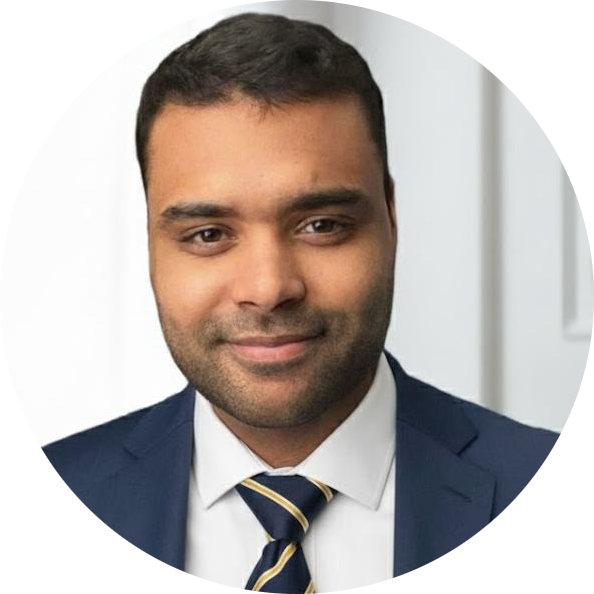
Jason Mackey
Jason Mackey
Managing Partner

A serial entrepreneur and investor with more than 15 years of experience at the intersection of technology, business strategy, and national security. Jason has founded and exited ventures in regulated industries, led complex operational restructurings, and built companies from early revenue through exit. His work has included advising Fortune 500 companies and elements of the U.S. Intelligence Community on the design and deployment of advanced AI systems.

Yuri Cataldo
Yuri Cataldo
Partner

An MIT MBA and serial operator who has built companies from scratch and scaled programs inside a Fortune 500. Over eight years at Autodesk, Yuri evaluated more than 800 startups, led AI competitive intelligence across 455 companies with $7B in combined funding, and scaled the generative AI program from 32 to 300 people across seven business units. The CEO called it the most successful cross-company effort in five years. At RavenRock, Yuri leads deal sourcing, evaluation, and portfolio operations.

Operating Network

A curated bench of CXO-level operators

RavenRock maintains a curated bench of CXO-level operators sourced from our network, matched to each portfolio company at the point of investment. Fractional CFOs and CTOs, RevOps leaders, and turnaround engineering leads. With 12 to 18 deals in Fund I, the bench scales with the portfolio. Every company gets its operator at deployment.

Investor Participation

RavenRock VC Fund I, LP is conducting an active raise with a first close at 50% of target capital. First close investors receive priority allocation and preferred terms. The fund deploys committed capital across 12 to 18 portfolio companies over a three-year investment period.

Fund Size$20M target / $25M hard cap
First Close$10M (50% of target)
GP Economics3% management fee on committed capital during the three-year investment period, stepping to 1.5% on invested capital thereafter; 20% carried interest over an 8% preferred return
Target Portfolio12 to 18 companies, $500K to $1.5M convertible notes per investment
Minimum Investment$250K (institutions) / $100K (individuals); waivable at GP discretion
Building the Firm

Fund I is a vehicle. The franchise is a series of funds and a second business line that compounds with the first.

Fund Series
Fund IFund IIFund III
Target size$20M$50M to $75M$150M to $250M
Portfolio12 to 1830 to 4075 to 125
Check size$500K to $1.5M$500K to $1.5M$500K to $2M
MandateProve the modelScale the playbookInstitutional platform

As AI matures, fewer engineers can maintain larger product surfaces. More companies fit the post-restructure profitability profile. The pipeline expands faster than the fund.

RavenRock Advisory

Already in operation. An expert-network and consulting firm partnering with lower-mid market companies to modernize, scale, or exit. The advisory deepens our operating bench, which directly supports portfolio companies at RavenRock Ventures. Two business lines, one expert network compounding across both.

Jason and Yuri previously founded and successfully ran an expert network of 250 senior executives sourced from private equity and MBB consulting firms. The architecture is proven.

A series of funds. A complementary advisory. One operating network compounding across both.

Let's Talk
If this strategy resonates, we would welcome a conversation.
Jason Mackey
Managing Partner
jason@ravenrock.vc (617) 388-6629
Yuri Cataldo
Partner
yuri@ravenrock.vc (917) 547-8230
QR code to book a meeting Book a meeting